RTX 5090: Worth the Hype?
Six weeks with NVIDIA's £2,000+ flagship, and the uncomfortable truth about who actually needs this much power
When NVIDIA announced the RTX 5090 at CES 2026, the numbers were staggering: 32GB of GDDR7 memory, 21,760 CUDA cores, and a 575W power draw that requires a 1000W power supply minimum. They called it "the most powerful GPU ever created for consumers." Tech media called it "the new benchmark." I called my bank, because this thing costs £2,149 at retail—and that's before you factor in the power supply upgrade most systems will need.
After six weeks of gaming, content creation, and general "can I justify this expense" soul-searching, I have answers. They're not simple.
Check RTX 5090 availability on Amazon UK →
First Impressions: Engineering Over Substance
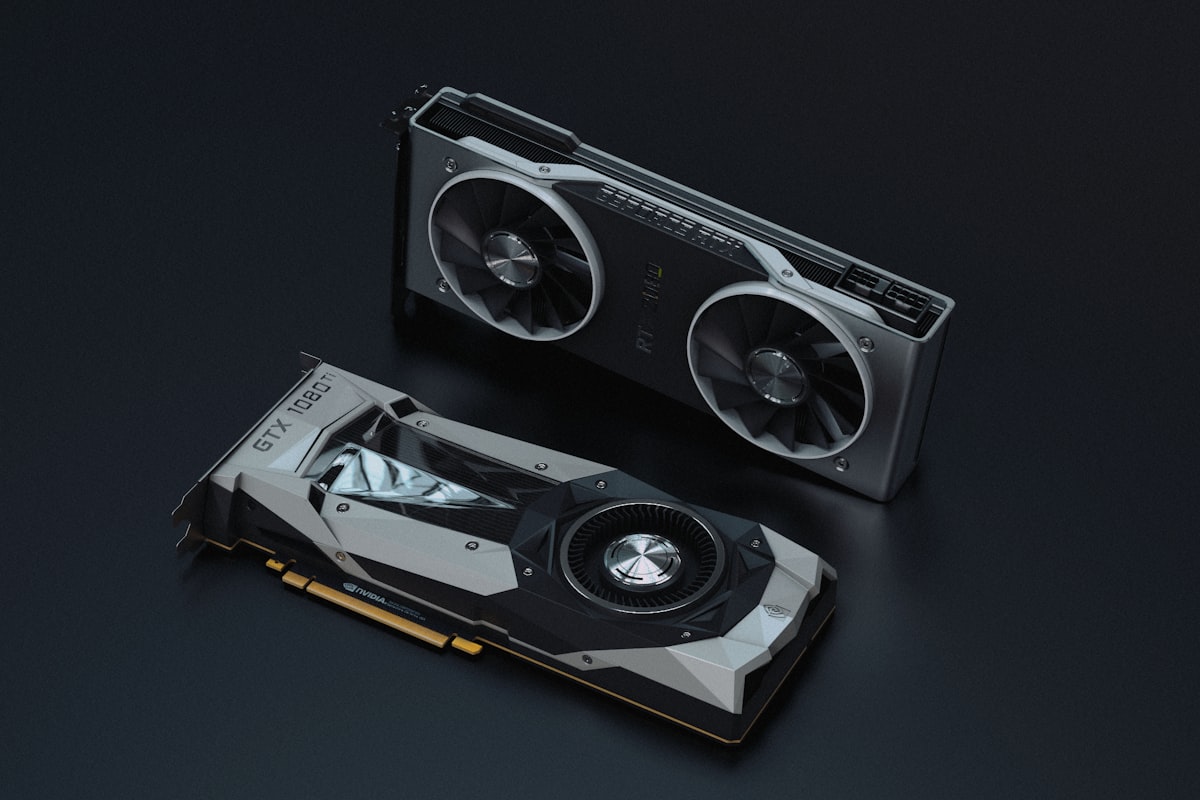
The RTX 5090 Founders Edition is physically massive: 304mm long, three slots thick, and weighing 2.1kg. It barely fit in my Corsair 4000D case, requiring me to remove the middle hard drive cage entirely. If your case is older or compact, measure carefully—this card demands space.
Installation highlighted the first hidden cost: power supply. The 5090 uses a new 12V-2x6 connector rated for 600W, and NVIDIA recommends a 1000W PSU minimum. My previous 850W unit (sufficient for an RTX 4080) wouldn't cut it. A quality 1000W 80+ Gold PSU costs £150-200. Factor that into your upgrade budget.
First boot, first game: Cyberpunk 2077 at 4K with full ray tracing and DLSS 4 Multi Frame Generation. The result was 180fps, smooth as silk, visually stunning. But here's the uncomfortable realization that hit me within hours: my previous RTX 4080 was already running this at 120fps. The 5090 is faster, unquestionably—TechSpot's benchmarks confirm it's roughly 35-40% quicker than the 4080 at 4K. But that difference, while measurable, is often imperceptible.
See RTX 5090 power requirements on Amazon →
What Actually Worked: When the Power Matters
The RTX 5090 isn't pointless. There are specific scenarios where it justifies its existence—and price.
First, path tracing in supported games. Cyberpunk 2077's path tracing mode (full ray tracing) is transformative but brutally demanding. The RTX 4080 could manage 60fps at 1440p. The 5090 hits 85-90fps at 4K with DLSS 4. That's the difference between "technically playable" and "actually enjoyable." If you're buying this card specifically for path-traced gaming, the value proposition exists.
Second, content creation workflows. I rendered a 10-minute 4K video in DaVinci Resolve with heavy noise reduction and color grading. RTX 4080: 47 minutes. RTX 5090: 28 minutes. For professional creators billing hourly, that time savings compounds. For hobbyists, it's harder to justify.
Third, AI and machine learning workloads. The 5090's 32GB VRAM is genuinely useful for local LLM inference. Running Llama 3 70B quantized to Q4 requires ~40GB, so it won't fit entirely in VRAM, but smaller models (13B-30B) run entirely on-card with room to spare. If you're experimenting with Stable Diffusion XL or training small models locally, the VRAM headroom matters.
"The 5090 isn't about being 40% faster in today's games. It's about enabling experiences that simply weren't possible before—path tracing at playable frame rates, AI workloads that need 24GB+, rendering that doesn't require coffee breaks." — My realization after week three
Real-World Usage: Living with a Space Heater
Six weeks of daily use revealed practical realities that benchmark charts don't capture.
The power draw is genuinely absurd. My entire system (5090, Ryzen 9 7950X, 32GB RAM, NVMe storage, peripherals) pulls 780W from the wall while gaming. That's not peak—that's typical. My electricity bill increased by £28 for February compared to the same month last year with an RTX 4080. Over a year, that's £336 in additional electricity costs. The 5090 doesn't just cost £2,149 upfront; it costs £2,500+ over three years if you game regularly.
The fan noise surprised me. Not because it's loud—NVIDIA's vapor chamber cooler is excellent, keeping the card at 72°C under full load with reasonable fan curves. But because it's unavoidable. At 575W, physics demands airflow. Even with headphones, you know this card is working. My previous 4080 was genuinely silent during light gaming; the 5090 is always audible.
The coil whine lottery is real. My first 5090 unit had noticeable coil whine under load—a high-pitched electrical whine during frame rate transitions. I exchanged it (Amazon's return policy was accommodating), and the replacement is quieter but not silent. This isn't unique to NVIDIA—high-power GPUs often have this issue—but at £2,149, expectations are higher.
4K 240Hz gaming is finally real. I paired the 5090 with a Samsung Odyssey Neo G8 (4K 240Hz). In competitive titles (Valorant, Apex Legends), I see 300-400fps at 4K with competitive settings. The card isn't the bottleneck—my reflexes are. For esports players with 4K 240Hz monitors, the 5090 finally delivers the frame rates these displays demand.
Considering the purchase?
The RTX 5090 starts at £2,149, but you'll likely need a PSU upgrade too. Check bundle options below.Where It Fell Short: The Price-Performance Chasm
For all its power, the RTX 5090 has real problems that buyers should understand.
The value proposition is broken. At £2,149, this card costs more than most complete gaming PCs. The RTX 5080 (£1,199) offers 85% of the performance for 56% of the price. Unless you need the VRAM (32GB vs 16GB) or are chasing the absolute highest frame rates, the 5080 is the smarter purchase. The 5090 exists for people who can't accept compromise, not for people who want value.
DLSS 4 Multi Frame Generation is impressive but flawed. The technology generates three additional frames for every one rendered, effectively quadrupling frame rates. In practice, it works: 45fps becomes 180fps, and the input latency is remarkably low. But artifacts are visible in fast-moving scenes—ghosting, smearing, occasional frame pacing issues. It's not the "free performance" NVIDIA markets it as; it's a trade-off that sometimes matters.
PCIe 5.0 compatibility is confusing. The 5090 supports PCIe 5.0, but no current gaming workload saturates PCIe 4.0 x16. This is future-proofing for workloads that don't exist yet. By the time PCIe 5.0 matters for gaming, we'll likely be on RTX 6090 or beyond. Don't upgrade your motherboard for this card.
Availability remains terrible. Six weeks after launch, RTX 5090 cards sell out within minutes at major retailers. Scalpers are charging £2,800-3,500 on secondary markets. If you're not willing to pay scalper prices or obsessively monitor stock alerts, you won't get one at MSRP.
Context and Considerations: The Competition Isn't Even Trying
AMD's RX 7900 XTX remains the value alternative at roughly £900, but it's not competitive with the 5090 in ray tracing or AI workloads. Intel's Arc Battlemage (B580) is a solid mid-range option but irrelevant at the high end. NVIDIA has no real competition at this price point, which explains the pricing confidence.
What complicates the decision is the RTX 5080. At £1,199, it's the card most enthusiasts should buy. The performance gap (15-20% slower than 5090) is smaller than the price gap (44% cheaper). Unless you specifically need 32GB VRAM or are chasing 4K 240Hz in everything, the 5080 is the rational choice.
But rationality doesn't drive luxury purchases. The 5090 exists for the same reason people buy £100,000 cars when £30,000 cars are sufficient: because they can, and because maximum performance has its own appeal.
The Verdict: Who Actually Needs This?
Buy the RTX 5090 if:
- You're a professional creator where render time directly translates to billable hours
- You play path-traced games (Cyberpunk 2077, Alan Wake 2) and demand 4K 60fps minimum
- You need 32GB+ VRAM for AI/ML workloads or 8K video editing
- You own a 4K 240Hz monitor and play competitive titles
- You have £2,500+ for the card plus necessary supporting upgrades
- You cannot accept anything less than the absolute best, regardless of price
Buy the RTX 5080 instead if:
- You want excellent 4K gaming but don't need to max every setting
- 16GB VRAM is sufficient for your use case
- You play at 1440p (the 5090 is wasted here)
- You want flagship performance without flagship pricing
- You upgrade GPUs every 2-3 years rather than holding long-term
Skip both and wait if:
- You game at 1080p (overkill)
- You're satisfied with your current card's performance
- You primarily play esports titles that run on integrated graphics
- The electricity costs and environmental impact concern you
Final Score: 7.5/10
The RTX 5090 is the most impressive GPU I've ever tested. It's also the hardest to recommend.
Technically, it deserves an 9/10. The engineering is remarkable—575W of power cooled effectively, 32GB of fast GDDR7, performance that genuinely enables new experiences. But value matters, and at £2,149 plus hidden costs (PSU, electricity), the score drops significantly.
This is a 7.5/10 product: exceptional at what it does, but accessible to so few that it barely matters. For the 1% of gamers who need this power, it's transformative. For everyone else—including most enthusiasts reading this review—it's an expensive flex that the RTX 5080 renders unnecessary.
If you buy it, you'll love it. But you'll also wonder, at 3 AM, whether you should have bought the 5080 and spent the £900 difference on literally anything else.
Affiliate Disclosure
Beyond The Static participates in the Amazon Associates Programme. This review contains affiliate links—if you purchase through these links, we may earn a commission at no extra cost to you. We purchased the RTX 5090 with our own funds; NVIDIA did not provide review hardware or compensation.Have questions about the RTX 5090? Drop a comment below or reach out on social media. This review reflects six weeks of testing with a retail-purchased card.